Monday, 6 July 2015

Top 10 Most Popular Posts

FF Crispin and Roy admiring my pop-up installation at Mirfield Monastery (2012)
After last week's post about my Zen Garden article being in the top ten over at Glow Magazine, I became curious about which posts were your favourites on this blog. And so I took a look.... and found last week's post about being in GLOW's top ten in my own top ten! (Thanks everyone for your continuing visits, likes and shares.)

Here's the TOP 10 list of your favourites! Click on titles to see posts :


Saturday, 27 June 2015

Top 10 on Glow Magazine


I'd like to take a moment to thank all the lovely folks (including Cynthia Barlow-Marrs) at GLOW MAGAZINE for sky-rocketing my Zen Garden article into their Top 10 Most Popular posts for three consecutive years and counting!

What a surprise. Thank you! 

Wednesday, 10 June 2015

Taking a Line for a Ride # 2

Southeastern  ex 1                             R Allen-Sherrwood 2015
Southeastern  ex 2                             R Allen-Sherrwood 2015
Southeastern  ex 3                       R Allen-Sherrwood 2015
Southeastern   ex 4                       R Allen-Sherrwood 2015
Southeastern   ex 5                       R Allen-Sherrwood 2015
Following on from  Taking a Line for a Ride # 1  , the above drawings are the most recent samples from my ongoing investigations into the beauty, nuance and essence of Motion, Materials used include watercolour pen, ink, and graphite. 

Tuesday, 2 June 2015

Space Sessions: Dr. Matthew Brewer (Part Two)

Matthew Brewer practicing Tai Chi           Photo: Daoist Internal Arts
Continuing from last week's post : Matthew Brewer is a teacher of Neigung, a traditional Chinese energy practice which pre-dates and informs Tai Chi. Join us in this second part of our discussion about the importance of creating space inside our physical bodies. 

RAS – So your teaching is really a way to open up internal spaces…

MB- Basically it’s for anybody who has a body. The thing about it is that we’re in gravity all the time. Gravity is constantly trying to close you down. Close all your spaces..

RAS- Compression?

MB – Nods. So for example the ‘Standing’ exercise, you’re  maintaining the spaces.

Daoist symbol - Yin & Yang *
 RAS. Is that similar to stretching?

MB – No. Stretching is all about tissue and tissue is important in that if it’s tight, you can’t release the joint. So you need to release the tissues, lengthen the tissues in order to make the space. But it’s not eventually muscles that make the space…. it’s the energy of the joint that makes the space. (My emphasis)

RAS- So how did you get interested in this field of work? I know you’ve been practicing for more than 20 years. Was it something to do with sports?

MB –It was a combination, partly for health -  I was a swimmer and I was looking for a replacement for swimming.  as I don’t like swimming over here. Too cold.  And partly for the philosophy. Tai Chi is a philosophy in practice, if you like. Or practice in philosophy.  A physical practice of philosophy.

RAS – Did you go to China to study?

Bruce K.Frantzis with Grandmaster Liu Hong Jie.
MB – No my teacher is American* (Bruce Frantzis). But I’ve trained with Chinese teachers as well.

RAS - This whole idea of creating and using space in the body is fascinating to me as I don’t normally think of literal internal space. But as you say gravity compresses and takes our spaces away. It has opened my eyes.

MB-  The basic difference between a baby’s body and an old person’s body is that one is all space. The baby’s body is very open. If you lay the baby on a table you’ll see the whole body lengthen as the spine relaxes, There’s no tension.  In comparison, when the old person is on the table, if they can even get onto the table, you’ll see the body tight and stuck. The spine doesn’t melt into the table It’s stuck in its various regions.

RAS- And this is because of compression and no space in the body. So opening this space really is the key.

MB- Yes. Another way to looking at it is through blood circulation…

RAS – ???

MB – Things circulate well, all the blood, lymph, all the liquids in the body, because there’s enough space. Circulation system is blood, so you’ve got your arteries and your veins… if you take pressure off those, get everything aligned and open the body up, it will just flow as it’s meant to. If you’re bent and things are closed down, you’ve got too much pressure in certain places, it’s like stepping on a hose pipe. You’ve got water running through the hose pipe but step on it and it affects the whole flow. Not just that one place. The whole system gets affected. Anyplace that’s closed will affect your whole blood flow and your lymph flow.

Antique Chinese medical illustration    photo: Wikipedia
RAS – Okay, so space is crucial.

MB – Yes, crucial.

RAS – So what would you suggest for people who don’t know anything about it, what would be a good entry point?

MB- Fundamentals is always the way in. Learn how to stand. Get the body aligned. That’s going to begin to help the body open up. And then single movements like the ‘Cloud Hands’ practice that we do. Choose a movement that’s the easiest to get all your alignments working….and the easiest way to learn alignment - stand.  Next, to then apply it to movement,  one repeating movement that allows you to train all these things. It’s complete enough to learn how to do it, but its not as elaborate as Tai Chi Form, where you have to remember a hundred different movements.

RAS– I think that’s the image most people think of when you mention Tai Chi. They think it’s like some kind of karate-in-slo-mo……never think about this aspect - that it’s an internal health enhancing exercise.

MB – Yes, Neigung means 'Internal Practice'.

RAS- Is Neigung the predecessor to Tai Chi?                                                

MB – Yes, much older. Tai Chi is a combination of Neigung and martial arts. You put the two together so you then have a martial art that’s powered from the inside rather than with just external tension strength.

RAS – I see, and how old is Neigung? How far does it go back?

MB- The written record goes back at least to…500BC. But even with those writings it’s clear that it was already well established by then. It’s a good three thousand years old.

RAS – On that note, I’d better let you get back to teaching class! Thank you for sharing your wealth of knowledge about Neigung. And for showing us how important internal space is, to living a vibrant and healthy life.

For more information please see Matthew's website here  for more details. 

*Yin & Yang symbol courtesy of longwhitecloudqigong

Saturday, 23 May 2015

The Space Sessions # 3 : Dr. Matthew Brewer

Matthew Brewer doing Tai Chi           Photo: Daoist Internal Arts
To do Tai Chi is to open up space in our body.”

Dr. Matthew Brewer is a teacher of Neigung, a traditional Chinese energy practice which pre-dates and informs Tai Chi as we know it today. (He is also my teacher). Listen in to Part One of our conversation, as Matthew talks about the importance of space within the body and how it links with our health and vitality.

Rachelle (RAS) -What is space in Neigung, because I believe in Chinese traditional medicine, space is considered a bonafide element alongside water, fire, wind and so forth.

Matthew Brewer (MB)  – No, that’s Hindu thought – Indians recognise Akasha (space) as the fifth element. For the Chinese it’s earth. Earth element has the same function as space in the Hindu system. Earth contains everything. It holds everything.

RAS – Including space?!

MB – Well…earth is the ground…unless you have a place to work from, you can’t do anything. In other words, without earth you have no place. From that point of view, there is space relative to the fact that there is earth.

RAS – But in your practice there are teachings about space inside-the-body! I recall your speaking about the spaces between our internal organs, or inside our joints. That isn’t something we normally think of - because space is usually perceived as being outside! Right?

MB- Really?

RAS – Well you’re used to thinking that way, Matthew, because for you it’s a way of being….

MB – Well, yes. From a Daoist* point of view, there’s as much inner space as there is outer space. So, say with meditation, your awareness can travel a very very long way out.  There is a practice in Daoism where you extend your awareness beyond the Moon, beyond the Sun, beyond the solar system, Beyond the stars. But at the same time you’ re travelling the same distance inwards, deeper and deeper. The space we’re talking about here is more equal to spirit.

RAS- Is that like the Unconscious, in psychological terminology?

MB- Well if you’re speaking of the unconscious, you’re talking about level of mind. And within traditional (Chinese) systems, mind is important - but it’s not the end.

RAS- So that means space is different from mind?

MB – Not true mind, but what we think of as mind. Most psychologists play with the emotions, you know: “how do you feel, what do you think, “  all that stuff.  That’s not yet True Mind.

RAS – Is it like in Japanese when they say “Kokoro” which is the word meaning ‘Heart/Mind’?

                                 Kokoro or Shin           Calligraphy by netnejpcalligraphy                           

MB- That’s Shin in Chinese. Yes, the Heart-Mind is what you really are. From the western point of view we’d talk about soul.  Shin and soul – well I don’t really want to equate them but they are in the same sort of territory.

RAS- Is this the space we strive for in Tai Chi?

MB – Well the mind is a way into that inner space, if you like.

RAS – But how does that link with to your talks about spaces between the joints….

MB – Well, at first you’re just talking physically…

RAS – Yes, but it’s actually reality because I’ve seen your demonstrations and have personally felt those internal spaces that you speak about.. I can attest that it’s real.

MB- Yes, that’s physical space. So, the difference between a joint that hurts and a joint that doesn’t hurt, is space.

RAS- Really!

MB- Yes. For instance you’ve got a bad hip, like the people who need a hip replacement, they’ve lost space so that the ball and socket are rubbing against each other.

RAS- Right, but that comes with normal wear and tear… 

MB – Why does it wear and tear? Because something is pressing on something else. It wouldn’t wear and tear if it wasn’t rubbing on something. How do you stop a joint from rubbing on something else? You maintain the space in it. You make space in the joint, the joint fills with fluid –because the inside linings of the joint ‘leak’ oil, if you like, the Synovial Fluid keeps the joint alive. So you need space to let the liquid in to cushion the joint.

RAS. So if the joint is worn down and rubbing, are you able to intentionally open it back up again?

MB – Sure!

RAS- My goodness….really! Well I suppose that’s why chronic pain sufferers get sent to you by the NHS  The practice helps them on a practical, real level.

MB –  Yes. Another example...slipped discs are the same. The vertabrae are too close, so it pushes the disc out. How do you unslip the disc? You open up the space and the disc goes back in.

To be continued

*Note: I am using the modern Chinese transliteration of the word 'Taoist', in keeping with Dr. Brewer's usage of the word, Please see his website ' Daoist Internal Arts'  for a more detailed explanation.. 

Calligraphy Illustration :  http://www015uppso-netnejpcalligraphy.blogspot.co.uk/2009/10/heart-japanese-calligraphy.html

Wednesday, 6 May 2015

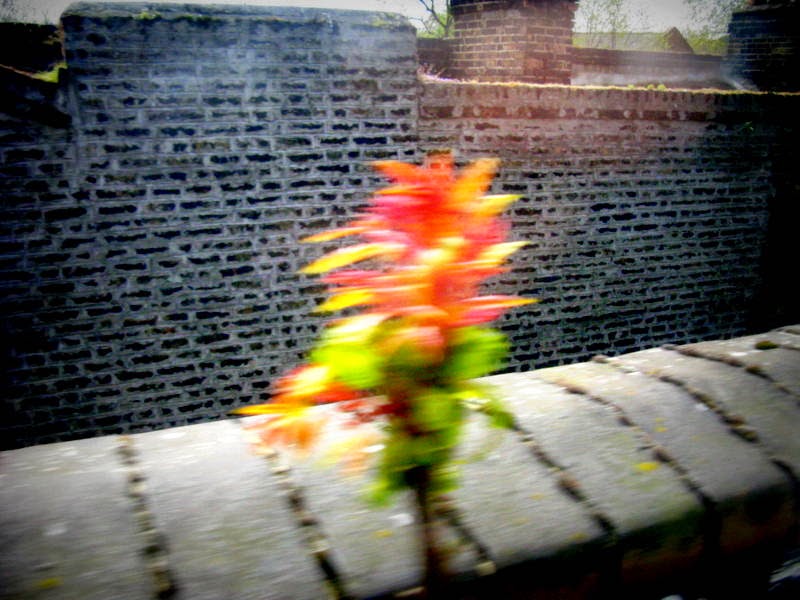
Motion Flower*

       "UV 40"                                           Photo: R Allen-Sherwood 2015
              "Motion Flower"                      Photo: R Allen-Sherwood 2015
          "I've been waiting for you.."                      Photo: R Allen-Sherwood 2015 
   "Whoosh!"                                                          Photo: R Allen-Sherwood 201
"Gutei's Finger"                                                 Photo: R Allen-Sherwood 2015
"Everything is in motion. Everything flows. Everything is vibrating".
William Hazlitt

*Note: In case you are wondering, nothing has been photoshopped. All the photographs above, were taken from the veiwpoint of a moving train. You are seeing them exactly as they came out of my Canon  'point & shoot' digital camera. Nothing technically clever but quite magical. (Well, to me anyways)  

Friday, 17 April 2015

Connect Transfer


Hello everyone, as I am still currently acclimatising due to having recently made a big move, this week I will share with you another gem from my collection of things which inspire me.

Based in New York, The Shen Wei Dance Troupe combine dance movement with ink painting in a celebration of free form expression. Hope you like it as much as I do. 

Stay well in your spaces & see you next week!